
Digital Product Passports: 7 Key Benefits for Business
Digital Product Passports (DPPs) are reshaping how businesses manage product data. These digital profiles store detailed information about a product’s lifecycle – from materials and manufacturing to recycling and disposal – accessible via QR codes through digital platforms. Here’s why they matter:
- Traceability: Track products across their entire supply chain, ensuring transparency and reducing risks.
- Regulatory Compliance: Simplify compliance with strict country-specific environmental laws and EU regulations like ESPR.
- Efficiency: Reduce manual tasks with automated data collection and reporting.
- Circular Economy Support: Enable reuse, repair, and recycling with detailed lifecycle insights.
- Customer Trust: Build transparency by sharing product origins and sustainability metrics.
- Innovation Opportunities: Use lifecycle data to develop new business models like repair services or take-back programs.
- Simple Implementation: Platforms like Blippa make it easy for businesses to adopt DPPs without needing technical expertise.
Industries such as fashion, electronics, and automotive are already benefiting from DPPs by improving transparency, meeting consumer demands, and aligning with circular economy goals. With tools like no-code platforms, businesses of all sizes can quickly integrate DPPs into their operations, saving time and cutting costs.
Tietoevry | Digital Product Passports – How to approach & use as an asset for the future
1. Better Traceability Across the Supply Chain
Digital Product Passports (DPPs) are reshaping how businesses in Sweden track their products, from raw materials to disposal. With full visibility into every stage of the supply chain, DPPs address one of the toughest challenges Swedish companies face today: ensuring accountability and transparency. This clarity not only simplifies compliance with regulations but also boosts operational efficiency.
Traceability and Lifecycle Visibility
Traditional supply chain systems often rely on outdated, paper-based methods that leave significant gaps in tracking. DPPs replace these fragmented systems with a unified, digital record that follows a product throughout its lifecycle. With machine-readable data, stakeholders gain a clear view of the materials used, manufacturing processes, and environmental impacts at every stage.
This level of detail allows businesses to pinpoint the origin of materials, monitor production conditions, and measure environmental factors such as carbon emissions and water usage. It’s a game-changer for companies looking to improve accountability and sustainability.
Regulatory Compliance and Cost-Effectiveness
Sweden’s strict environmental standards, coupled with the upcoming EU Ecodesign for Sustainable Products Regulation (ESPR), make traceability a must-have. Under these regulations, industries like textiles, construction, and automotive will need to integrate DPPs into their operations.
Without full supply chain visibility, businesses risk falling short when it comes to addressing issues like carbon emissions, pollution, or labour concerns. These blind spots can hinder efforts to meet environmental standards and make it difficult to achieve sustainability goals.
Operational Efficiency Improvements
By providing real-time access to product data, DPPs streamline supply chain operations. Manual data collection from various suppliers becomes unnecessary, reducing administrative workloads and simplifying compliance reporting.
The structured data format also enables automated reporting and detailed analysis. This helps companies identify bottlenecks, improve material flows, and optimise processes based on hard data rather than assumptions. The result? Faster, smarter decisions that enhance overall efficiency.
Alignment with Sustainability and Circular Economy Goals
Beyond regulatory compliance, DPPs empower businesses to adopt more sustainable practices. They provide the data needed to support Sweden’s circular economy goals, making it easier to implement strategies like reuse, repair, and recycling.
With better insights into material sourcing and environmental impacts, companies can make ethical decisions and work towards decarbonisation targets. DPPs also integrate end-of-life processing options, simplifying material reuse and offering practical solutions to sustainability challenges.
This level of traceability opens doors to new circular business models. By enabling service-based approaches like repair and refurbishment, businesses can unlock additional revenue streams from retained ownership and recover value from materials at the end of their lifecycle. It’s a win-win for both sustainability and profitability.
2. Easier Regulatory Compliance
Navigating Sweden’s intricate environmental regulations, which operate at both national and EU levels, can be a daunting task for businesses. Digital Product Passports (DPPs) simplify this process by automating documentation and data collection, making compliance more straightforward and audit preparation much less stressful.
Regulatory Compliance Made Simpler and More Cost-Effective
Traditional methods of meeting regulatory requirements often involve manual processes prone to errors and inefficiencies. Digital Product Passports tackle this by automatically gathering and securely storing key information – like carbon footprint metrics, material breakdowns, labour conditions, and guidelines for end-of-life product handling. This not only reduces administrative burdens but also ensures that compliance records are always accurate and up to date.
Boosting Operational Efficiency
By embedding regulatory requirements directly into production processes, DPPs streamline workflows and reduce the risk of oversight. Automated data capture at every stage of manufacturing ensures continuous compliance and makes audit preparation faster and more efficient.
Supporting Sweden’s Sustainability and Circular Economy Goals
Digital Product Passports play a vital role in advancing Sweden’s sustainability efforts. They provide detailed environmental data to monitor progress toward carbon neutrality and circular economy objectives. By tracking emissions and material usage across the supply chain, DPPs enable businesses to meet extended producer responsibility requirements and facilitate the repair, recovery, and recycling of products with precision.
3. Higher Operational Efficiency
Digital Product Passports (DPPs) are transforming how companies manage workflows, cutting down on administrative burdens and freeing up resources to focus on growth. With automated systems handling data flow, businesses can shift their attention from tedious tasks to more strategic initiatives.
Streamlining Operations
One of the biggest advantages of DPPs is automated data collection and processing. Instead of juggling multiple systems to track information, all relevant product data is centralised in one easily accessible location. This setup not only simplifies data management but also gives manufacturers better oversight of their processes.
For manufacturing teams, this means real-time visibility into production. If a problem arises, managers can quickly trace it back to specific batches, suppliers, or production lines. This rapid troubleshooting reduces downtime and ensures defective products don’t reach customers.
Inventory management also gets a boost. With DPPs, warehouse staff can scan QR codes to instantly access detailed product information, cutting down on picking errors and speeding up order fulfilment. Plus, real-time tracking of stock levels helps avoid costly stockouts or excess inventory, keeping working capital in check.
Enhanced Traceability and Lifecycle Insights
DPPs also bring the entire product lifecycle into focus, enabling smarter, faster decisions. Supply chain managers can identify reliable suppliers and address potential issues before they escalate. This proactive approach ensures smoother operations and fewer disruptions.
Customer support teams benefit too. When a customer needs help, support staff can quickly pull up a product’s complete history, offering faster resolutions and improving satisfaction.
Additionally, performance tracking through DPPs enables predictive maintenance, helping businesses anticipate when products might require servicing or replacement. This not only reduces downtime but also opens up opportunities for proactive maintenance services, strengthening customer relationships and creating new revenue streams.
Simplifying Compliance and Reducing Costs
Regulatory compliance is another area where DPPs shine. Instead of manually compiling reports, these systems automatically generate the necessary documentation, cutting down on labour costs while ensuring everything is accurate and complete.
The cost benefits don’t stop there. Automated compliance reduces the risk of fines or shutdowns due to regulatory violations. For Swedish businesses, navigating the intricate mix of national and EU environmental regulations becomes much more manageable with DPPs.
When auditors come knocking, companies can provide well-organised, comprehensive records in minutes rather than weeks. This level of efficiency not only saves money internally but also lowers external audit fees, making the entire process smoother and more cost-effective.
4. Support for Circular Economy and Sustainability Goals
Digital Product Passports (DPPs) play a crucial role in advancing circular economy strategies by enhancing traceability and ensuring compliance with regulations. As mandated by the EU’s Ecodesign for Sustainable Products Regulation and highlighted in the Circular Economy Action Plan, DPPs offer detailed digital records tailored to support efforts in reducing waste and maximizing the value of products.
How DPPs Align with Circular Economy Goals
DPPs go beyond simple traceability – they actively promote circular practices like reuse, repair, remanufacturing, and recycling. Take the textiles industry, for instance: tracking fabric composition through DPPs makes it easier to sort materials for recycling. In electronics, manufacturers can access detailed component data to aid in proper disassembly and material recovery. Battery producers, on the other hand, can use performance data to explore second-life applications for their products. Additionally, the lifecycle data provided by DPPs helps businesses identify ways to cut carbon emissions and transition to more recyclable and sustainable materials. These practices enhance existing efficiencies achieved through automated data tracking.
Longer Product Lifespans and Better End-of-Life Solutions
By offering guidance to both consumers and manufacturers, DPPs encourage sustainable choices that extend the lifespan of products. They also simplify end-of-life processes by embedding clear reuse and disposal instructions, transforming potential waste into valuable resources. This not only supports environmental goals but also adds value to the entire product lifecycle.
sbb-itb-256b3ff
5. Better Customer Transparency and Trust
Traceability and Lifecycle Visibility
Today’s consumers care deeply about where their products come from, and Digital Product Passports (DPPs) provide the clarity they’re looking for. A recent study found that 46% of shoppers are more interested than ever in understanding the origins of the items they buy. Transparency has become a critical factor in their purchasing choices. DPPs offer detailed, trustworthy information about a product’s journey – covering everything from sourcing and materials to labour conditions, recyclability, and environmental impact.
Take PANGAIA, a UK-based fashion brand focused on sustainability. Through its ReWear platform, each garment comes with a QR code linked to its digital passport. This gives customers access to the product’s full story, offering a level of transparency that builds confidence and trust. By connecting consumers directly to the lifecycle of their purchases, brands can establish stronger relationships with their audience.
This kind of openness doesn’t just inform – it reassures. Transparent supply chains have been shown to increase trust, with 58% of consumers reporting greater confidence in brands that provide this level of insight. By showcasing a product’s lifecycle and environmental impact, DPPs empower customers to make more informed, sustainable choices.
Alignment with Sustainability and Circular Economy Goals
As consumer interest in transparency grows, DPPs also serve as a way to back up sustainability claims with hard evidence. For instance, 41% of shoppers now consider a product’s environmental impact, and 45% expect companies to follow sustainable practices as a baseline. By providing verifiable data, DPPs help brands avoid accusations of greenwashing while adding value to their products. A great example of this is Fairphone, a Dutch company that shares detailed insights into its products’ origins, materials, environmental footprint, and end-of-life options.
"A Digital Product Passport is a tool that every consumer and business should embrace. It empowers consumers with vital product information, fostering transparency and trust. It supports businesses by streamlining supply chain management, opening doors to new markets. It also propels innovation by encouraging product designers to create more durable, upgradeable, and conscious products, aligning with a sustainable future." – Bart Nollen, Co-Founder, Dayrize
The numbers back this up: two-thirds of consumers now factor in durability or reparability when shopping, and 54% say they trust refurbished goods from respected brands. By offering transparency about a product’s history, DPPs enhance consumer confidence and loyalty.
For businesses, DPPs provide a platform to tell their product’s unique story. They allow companies to communicate their values and commitment to sustainability in a way that resonates with eco-conscious buyers. This connection is particularly important for younger audiences. Among 18–34-year-olds, 50% report feeling anxious about climate change, compared to 35% of the general population. By sharing detailed sustainability metrics, DPPs help brands align with the priorities of these environmentally aware customers, creating stronger engagement and satisfaction.
6. Data-Driven Innovation and New Business Models
Traceability and Lifecycle Visibility
The introduction of Digital Product Passports (DPPs) is transforming how businesses approach innovation and revenue generation. By capturing detailed data across a product’s entire lifecycle, DPPs open the door to new opportunities like usage-based pricing and product-as-a-service models. These approaches allow companies to rethink traditional sales strategies and offer services tailored to real-time product performance.
For instance, manufacturers can use DPP data to monitor how products perform in various conditions, enabling them to fine-tune future designs and offer predictive maintenance services. Imagine a scenario where a company proactively schedules maintenance based on actual wear and usage patterns – this not only improves customer satisfaction but also extends the product’s lifespan. These insights, drawn from DPP data, fuel both operational improvements and the creation of entirely new business opportunities.
Operational Efficiency Improvements
DPPs don’t just change how products are sold – they also transform how they’re made and managed. The analytics generated by these passports help manufacturers identify which production batches perform best, detect quality issues early, and adjust processes to improve outcomes. This level of insight enhances efficiency across the board.
Take inventory management as an example. With a clearer understanding of product lifecycles and usage patterns, businesses can forecast demand more accurately and allocate resources more effectively. On the customer service side, having access to a product’s complete history allows support teams to pinpoint issues faster, suggest tailored solutions, and even anticipate problems before they arise. The result? Faster resolution times, lower costs, and happier customers.
Alignment with Sustainability and Circular Economy Goals
DPPs also align seamlessly with the principles of the circular economy, creating opportunities to rethink how products are reused, refurbished, and recycled. For example, take-back programmes become far more practical when companies can track a product’s condition and remaining value. This data allows businesses to incentivise customers to return products at the right time, maximising material recovery and refurbishment potential.
In the refurbishment and resale markets, DPPs provide verified product histories that boost consumer confidence in second-hand goods. Buyers are more likely to trust refurbished items when they can see detailed information about a product’s past performance and maintenance. Businesses, in turn, can capture additional value by reselling products multiple times throughout their lifecycle.
When it comes to material recovery, DPPs shine by providing precise data on a product’s composition and condition at the end of its life. This enables companies to design targeted recycling processes, recover valuable materials, and even develop new products from reclaimed components. Such data-driven approaches not only support sustainability goals but also create fresh opportunities in the expanding circular economy sector.
Collaboration takes this one step further. By sharing DPP data, manufacturers, logistics providers, retailers, and recyclers can work together to streamline entire value chains. This level of transparency fosters efficiencies that benefit all parties involved while driving forward broader sustainability initiatives.
7. Simple Implementation with No-Code Solutions (Blippa)
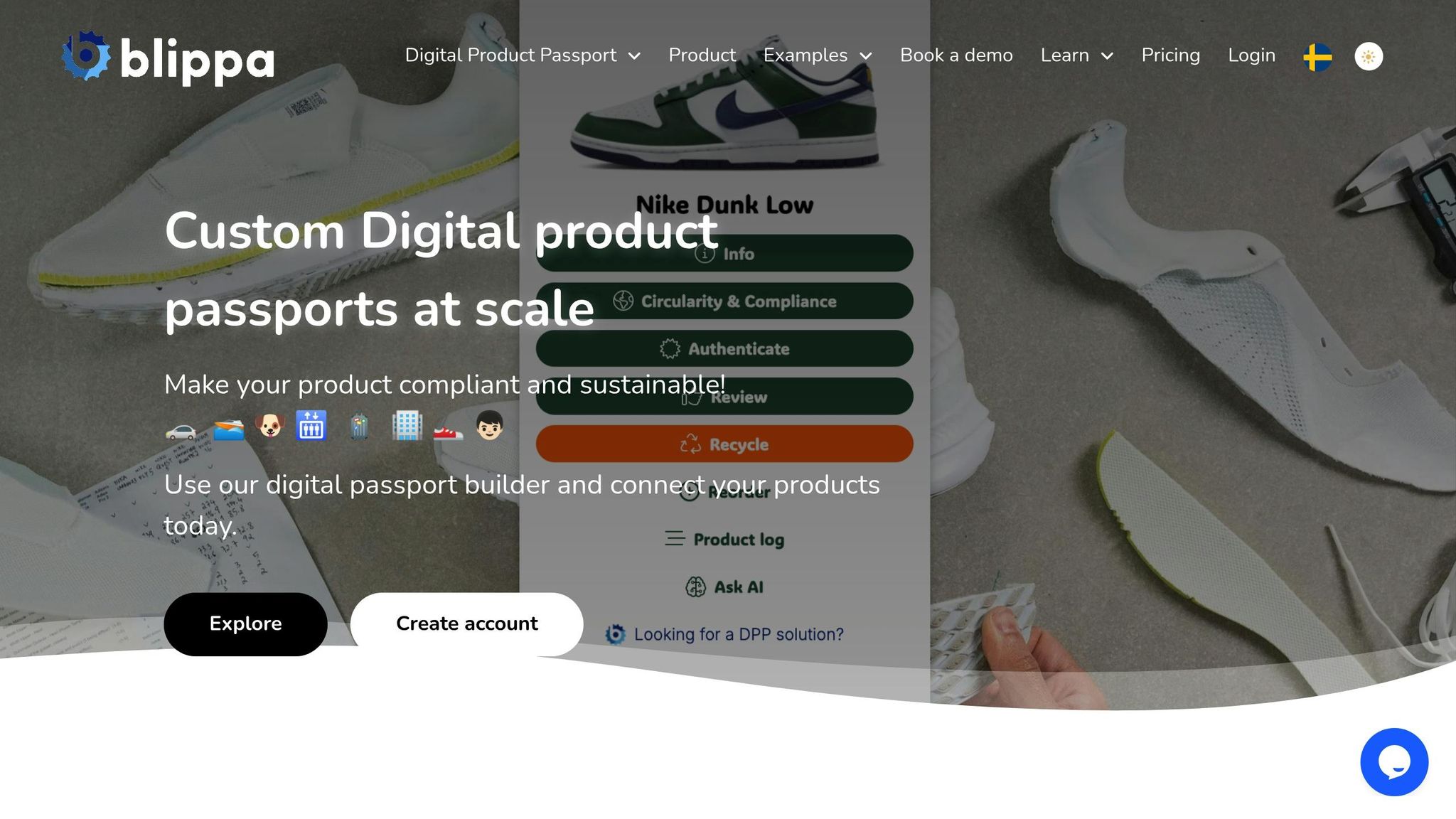
Blippa showcases how no-code platforms bring the advantages of Digital Product Passports into everyday business operations, making them accessible and practical.
Streamlining Operations
Traditionally, setting up Digital Product Passports required technical know-how, custom development, and significant IT resources. Blippa changes the game with its no-code platform, enabling businesses to handle this process without any programming skills. With a user-friendly editor, teams can quickly design digital product passports using pre-built templates that ensure compliance and traceability. The platform also includes a built-in QR code generator, linking physical products to their digital profiles. Features like version control and role management ensure product information stays accurate and up to date.
This simplified approach paves the way for a smooth shift to efficient compliance management.
Simplifying Compliance While Cutting Costs
Blippa makes it easier to adapt to changing regulations. Its notification system keeps businesses informed about compliance deadlines, helping them stay on track. By using a cloud-based hosting model, Blippa eliminates the need for costly internal servers, reducing both initial costs and ongoing maintenance. A staging environment adds another layer of security, allowing businesses to test compliance updates before implementing them, which helps minimise risks.
On top of compliance, Blippa strengthens traceability by seamlessly connecting with your existing systems.
Enhancing Traceability and Product Lifecycle Insight
Blippa boosts traceability by integrating with enterprise resource planning, supply chain management, and customer relationship management systems. This ensures data flows automatically, cutting down on manual input and reducing errors. Businesses can also maintain brand consistency with custom domains, directing customers to a branded portal that displays the full lifecycle of a product – from raw materials to distribution. Integrated label production tools keep physical products aligned with their digital records by generating accurate QR codes and identification markers.
Driving Sustainability and Circular Economy Efforts
Blippa supports sustainability goals by encouraging collaboration across the value chain. Its sharing and distribution tools make it easy for recycling partners, refurbishment experts, and take-back programme operators to work together. User management features ensure that everyone – suppliers, manufacturers, retailers, and waste management partners – has access to the information they need. This transparency helps build a more connected and sustainable product lifecycle.
Comparison Table
Digital Product Passports offer measurable advantages across various business areas. The table below provides a concise overview of these benefits:
| Benefit | Primary Impact | Potential Cost Savings | Implementation Time | Industry Relevance |
|---|---|---|---|---|
| Better Traceability | Improves supply chain visibility and helps prevent disruptions | Avoids substantial costs tied to recalls | Quick to deploy | Crucial for textiles, electronics, and automotive sectors |
| Easier Regulatory Compliance | Simplifies compliance reporting and reduces administrative workload | Cuts down legal and compliance expenses | Integrates swiftly with current processes | Vital for industries like batteries, chemicals, and pharmaceuticals |
| Higher Operational Efficiency | Lowers manual input and operational bottlenecks | Reduces labour costs noticeably | Moderate deployment time | Applicable across all industries |
| Circular Economy Support | Enhances material recovery and promotes sustainable practices | Lowers raw material expenses | Requires moderate integration | Key for sectors like fashion, electronics, and packaging |
| Customer Transparency | Improves product information access, building consumer trust | Boosts revenue through better customer satisfaction | Rapid implementation | Especially relevant for consumer goods and food industries |
| Data-Driven Innovation | Enables new revenue opportunities through enhanced data insights | Unlocks additional business value | Time varies based on project scope | Strategic for technology, manufacturing, and service industries |
| No-Code Implementation | Reduces IT development costs and accelerates deployment | Offers cost advantages over custom-built solutions | Quick to implement | Suitable for businesses of all sizes |
Swedish Market Context
These benefits reflect typical outcomes for mid-sized Swedish companies, with nuances for urban hubs like Stockholm and Gothenburg.
Measurement Standards
All cost savings are presented in SEK. For industries where temperature matters, Celsius is the standard. Together, these considerations highlight the broader impact on business performance.
Cumulative Impact
By combining these advantages, companies can achieve more transparent, efficient, and sustainable operations. These improvements not only enhance performance but also generate annual cost savings. The actual return on investment will vary depending on the complexity of the industry and the current state of digital systems.
Conclusion
Digital Product Passports (DPPs) offer Swedish businesses practical solutions to tackle challenges related to sustainability, operational efficiency, and regulatory compliance.
In cities like Stockholm and Gothenburg, improved traceability helps minimise supply chain disruptions, while streamlined reporting reduces administrative workloads, leading to noticeable cost savings. These benefits make DPPs a valuable tool for businesses aiming to enhance their operations.
By optimising the use of raw materials and increasing transparency, DPPs play a key role in advancing Sweden’s circular economy. This approach not only promotes sustainability but also strengthens consumer trust, fostering greater loyalty among customers.
The data from DPPs also opens doors to fresh business opportunities, enabling companies to explore innovative models and develop new revenue streams that support long-term growth and competitiveness.
Blippa’s no-code platform further simplifies the adoption of DPPs. With features like pre-built templates, QR code generators, and integrated hosting, businesses can implement DPPs without requiring extensive IT resources, making it easier to get started and reap the benefits.
FAQs
How do Digital Product Passports support sustainability and circular economy goals for businesses?
Digital Product Passports (DPPs) are an essential tool for businesses aiming to meet their sustainability and circular economy objectives. They encourage reuse, recycling, and waste reduction by offering clear and detailed insights into a product’s lifecycle – covering everything from material composition to origin and environmental footprint.
By making this data readily available, DPPs help companies pinpoint ways to adopt greener production methods, extend the lifespan of their products, and use resources more efficiently. Beyond advancing environmental efforts, they also assist businesses in complying with regulations and strengthening trust with environmentally aware customers.
What are the benefits of using no-code platforms like Blippa to implement Digital Product Passports in businesses?
Using a no-code platform like Blippa to implement Digital Product Passports (DPPs) can make life a lot easier for businesses. These tools simplify the entire process, allowing teams without technical skills to create and manage DPPs quickly and efficiently. This not only saves time but also reduces costs, letting businesses focus on what they do best while still staying on track with compliance and sustainability targets.
What’s more, no-code platforms offer the kind of flexibility that businesses need to keep up with changing regulations or industry demands. With Blippa, there’s no need for heavy development work to adapt your DPPs – changes can be made seamlessly. Blippa also enhances traceability and transparency, which helps build trust with customers and stakeholders. Plus, it supports circular economy practices, aligning with broader environmental goals. By using no-code tools, organisations can streamline their processes and hit both environmental and operational milestones with greater ease.
How do Digital Product Passports build customer trust and improve supply chain transparency?
Digital Product Passports (DPPs) help build customer trust by sharing verified information about a product’s origin, materials, and entire lifecycle. This level of clarity enables customers to make choices with confidence, knowing the product aligns with sustainability and ethical practices.
With a digital record of the supply chain, DPPs also ensure traceability. Businesses can showcase their dedication to responsible sourcing and environmental responsibility, strengthening connections with customers who prioritise openness and accountability.